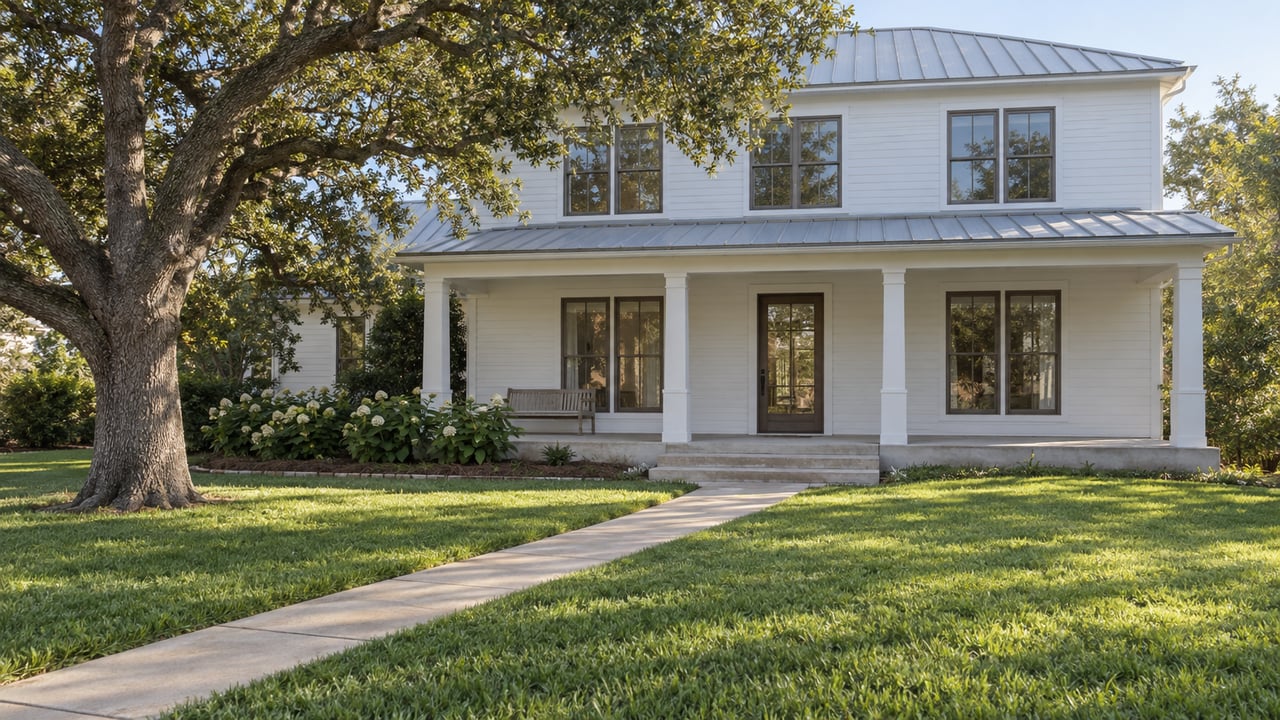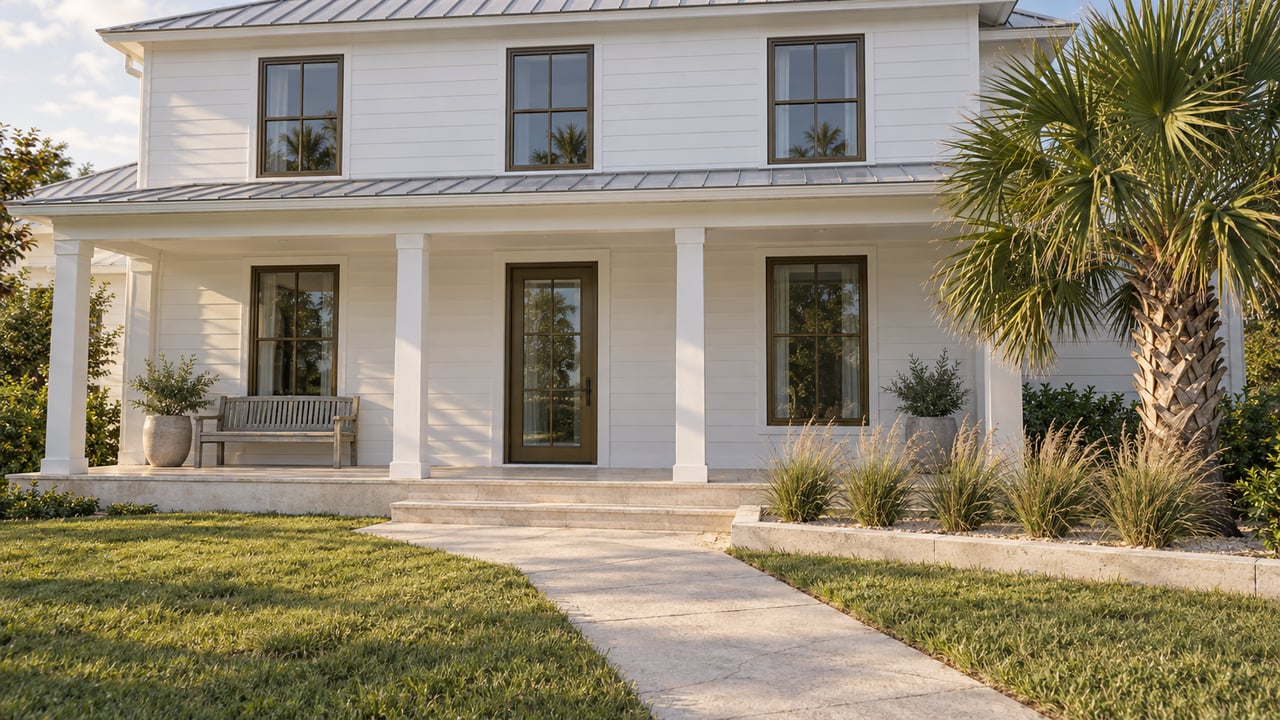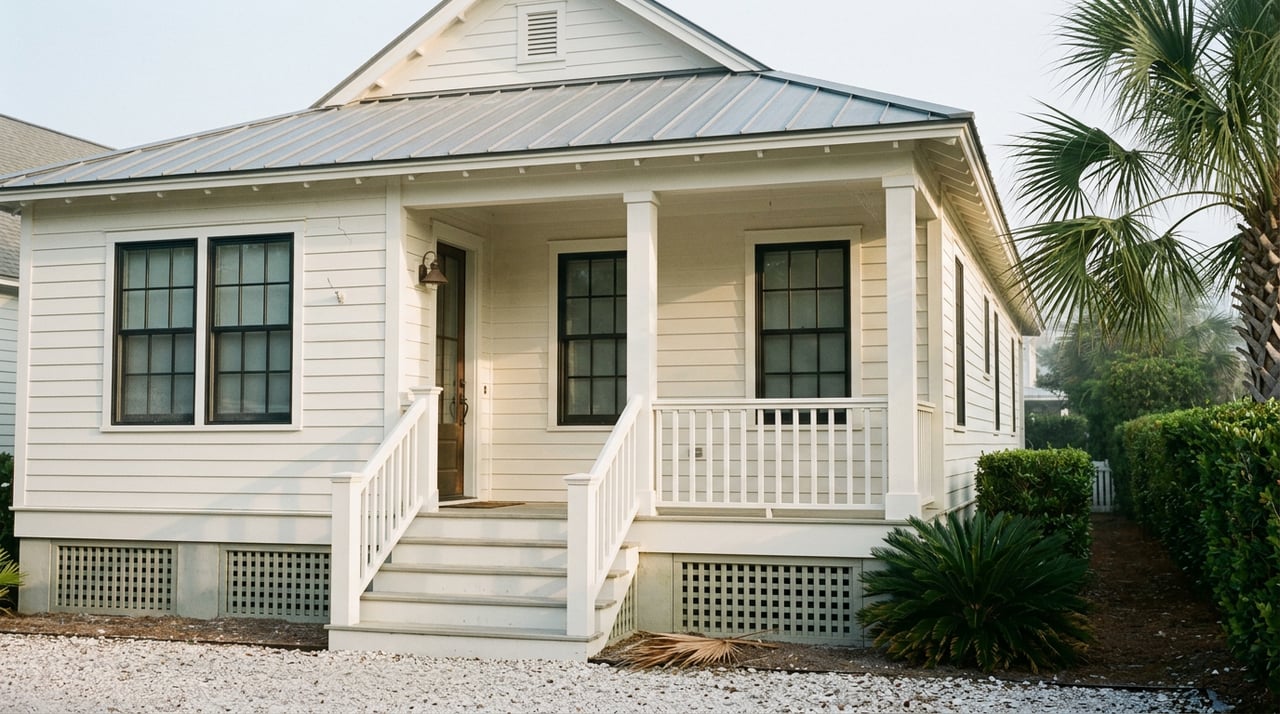
A buyer stands in the front room of an eleven-hundred-square-foot cottage on one of Seaside's interior lanes, listing sheet in hand. The asking price sits north of two and a half million dollars. She does the math twice, because the number per square foot keeps landing somewhere that doesn't match anything she has seen anywhere else on 30A. Her assumption walking in was that a price this high on a town this famous would mean a fast sale, competing offers, maybe a bidding war. Instead, her agent mentions the property has already been listed for two and a half months, and that isn't unusual here.
That gap between price and pace is the part of the Seaside market that catalogs and portal searches don't explain. The town commands the highest price per square foot on the corridor and simultaneously carries a longer average time on market than the national norm. Those two facts look like a contradiction until you understand what's actually driving the price, which has very little to do with the house and almost everything to do with a plan drawn up more than four decades ago.
The math doesn't behave like a typical luxury market
Local market data compiled through May 2026 puts Seaside's average price per square foot at roughly $1,373, among the highest figures anywhere along Scenic Highway 30A. What makes that number strange is what it's attached to. The average home in Seaside runs about 1,856 square feet, well under the Walton County average of 2,342 square feet, according to figures current as of June 2026. Buyers here are paying a premium not for more house, but for meaningfully less of it.
Over the trailing twelve months ending in February 2026, the median sale price for a Seaside home sat just under $2.9 million. Run the numbers and a fair amount of that price tag is attached to a cottage smaller than the county average family home. That isn't a pricing error and it isn't a marketing story about finishes or views. It's the byproduct of a town that physically cannot get any bigger.
A town that can't get bigger
Seaside was laid out in the early 1980s on 80 acres with a half mile of beach frontage, and the street grid, lot lines, and building envelopes established then are still what governs the town today. That's worth sitting with for a moment. The number of home sites in Seaside was fixed decades before short-term rental income, remote work, or the current wave of second-home buyers ever entered the conversation. There is no undeveloped parcel waiting to become the next phase.
Compare that to a community like Rosemary Beach, which began development in the mid-1990s, more than a decade after Seaside's plan was already locked in. A later start means a different relationship between land, home size, and price than a town whose blueprint was finished when the market looked nothing like it does today. Seaside doesn't have a newer phase waiting in the wings. Every cottage that exists today is every cottage that will ever exist inside those original 80 acres.
That's the real mechanism behind the price per square foot. The house isn't worth more because it got nicer. It's worth more because there will never be another lot beside it.
Why the highest price per foot doesn't mean the fastest sale
Here's where the Seaside market breaks the pattern buyers expect from scarcity. Conventional wisdom says a limited, in-demand product should move quickly. Seaside homes averaged 82 days on market as of February 2026 data, well above the national average of 54 days, even as the median price sat near $2.9 million.
Scarcity in Seaside doesn't create urgency. It narrows the pool of people who can act on it. A $2.9 million budget for 1,856 square feet is not a decision most buyers make on impulse, and the buyer who wants exactly that combination of small footprint, historic town plan, and walk-to-everything proximity is a specific kind of buyer, not a broad one. Fewer qualified people chasing a fixed supply doesn't produce a fast clearing market. It produces a thin one, where each listing waits for the one buyer whose criteria and budget line up, rather than the dozen who might chase a more conventional listing at a lower price point.
That has a direct, practical consequence for anyone comparing Seaside to somewhere like WaterColor or Rosemary Beach. A longer average time on market here is not a signal that the town has cooled or that leverage has shifted toward buyers. It's what a fixed-supply market with a narrow buyer pool looks like even when demand for the town itself hasn't changed at all.
What ownership inside a fixed footprint actually looks like
The same scarcity that sets the price also shapes daily life for anyone who owns there. Seaside's town center runs a managed paid parking program each high season, with hourly rates that start at $10 for the first two hours and $7 for each additional hour along Smolian Circle, funding a complimentary shuttle that brings visitors in from an off-site lot. It's a sensible answer to a real problem: there is no room to build more parking inside a town plan that was finalized before cars needed to be accommodated at this scale.
That detail matters for buyers thinking about how a Seaside property will actually function, whether for personal use, guests, or short-term rental. A fixed footprint means fixed parking, fixed lot lines, and a design review process through the town's architectural committee for any exterior change, from paint colors to roofline adjustments. None of that is a flaw. It's the same mechanism that sets the price per square foot, showing up in the texture of ownership rather than the closing statement.
Questions worth asking before you write an offer
- What have comparable Seaside cottages actually closed for in the past 90 days, not just what's currently listed? Price per square foot in a thin market can swing more than headline averages suggest.
- How does the property's location within Seaside affect its buyer pool? A cottage a short walk from the town center draws a different, often larger, group of interested buyers than one on the quieter south side.
- What is a realistic marketing timeline for this specific price point, given that 82 days is an average, not a ceiling?
- Are there planned exterior changes or renovations, and what does the architectural review timeline look like for those changes before you commit to a purchase date or a rental launch?
- How does the parking and shuttle system affect guest logistics if short-term rental income is part of the plan?
A few direct questions
If homes sit on the market longer, does that mean there's room to negotiate on price? Not automatically. A longer average time on market here reflects a smaller pool of qualified buyers, not softening demand for the town itself. Negotiating room depends on the specific property, its location within Seaside, and how it's priced against recent closed comparables, not on the town-wide average alone.
Could Seaside ever expand and add more inventory? The town's 80-acre footprint and original lot plan have defined its boundaries since the early 1980s, and that structure is what has kept the supply fixed for more than four decades. Any buyer comparing Seaside to newer 30A communities should factor that permanence into the comparison, since it's the reason the smaller inventory here has held its value the way it has.
If you're weighing a Seaside cottage against a larger home a few miles down 30A, the math only makes sense once you know what you're actually paying for. It isn't square footage. It's a fixed, unrepeatable footprint that was decided decades before anyone currently shopping this market was in the picture. I walk buyers through exactly this kind of comparison across Seaside, WaterColor, and the rest of the 30A corridor every week, matching what a property is truly worth against what it will cost to live with. If you're trying to figure out whether a specific Seaside address makes sense for your budget and your plans, Donna Gonzalez would love to talk it through with you. Let's Connect.
This article is general information, not legal, tax or financial advice. Consult a qualified professional about your situation.