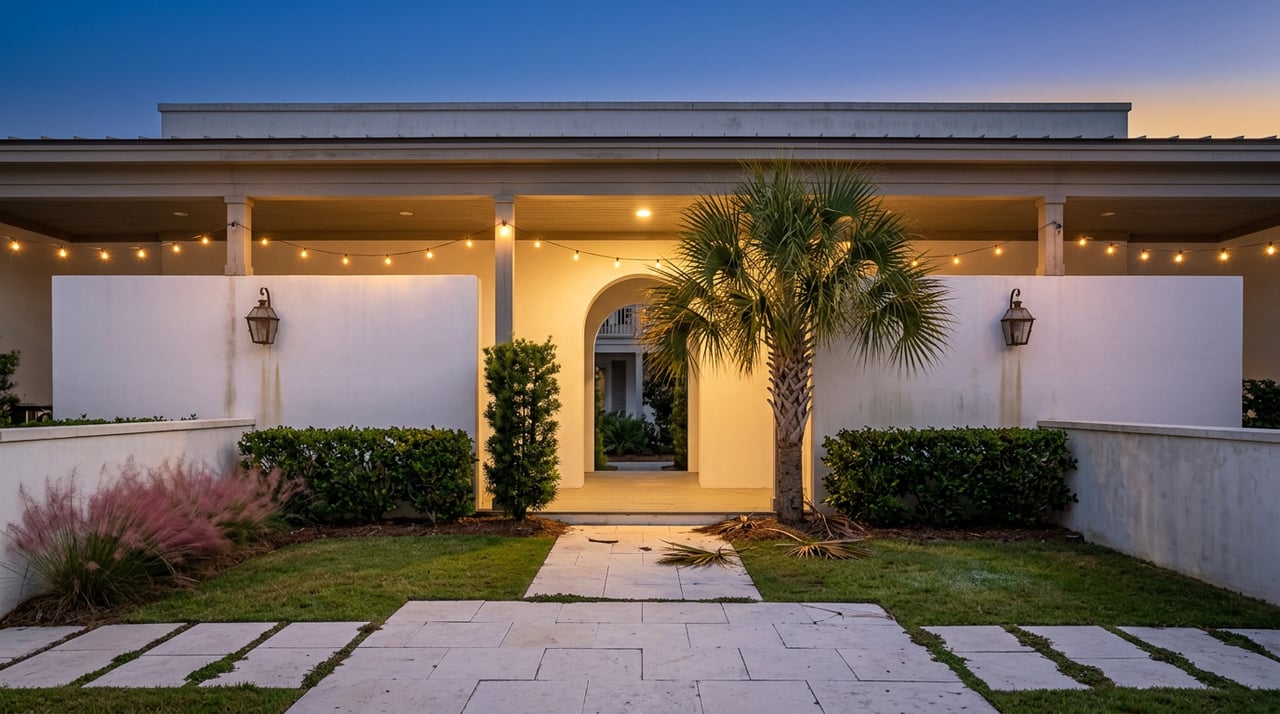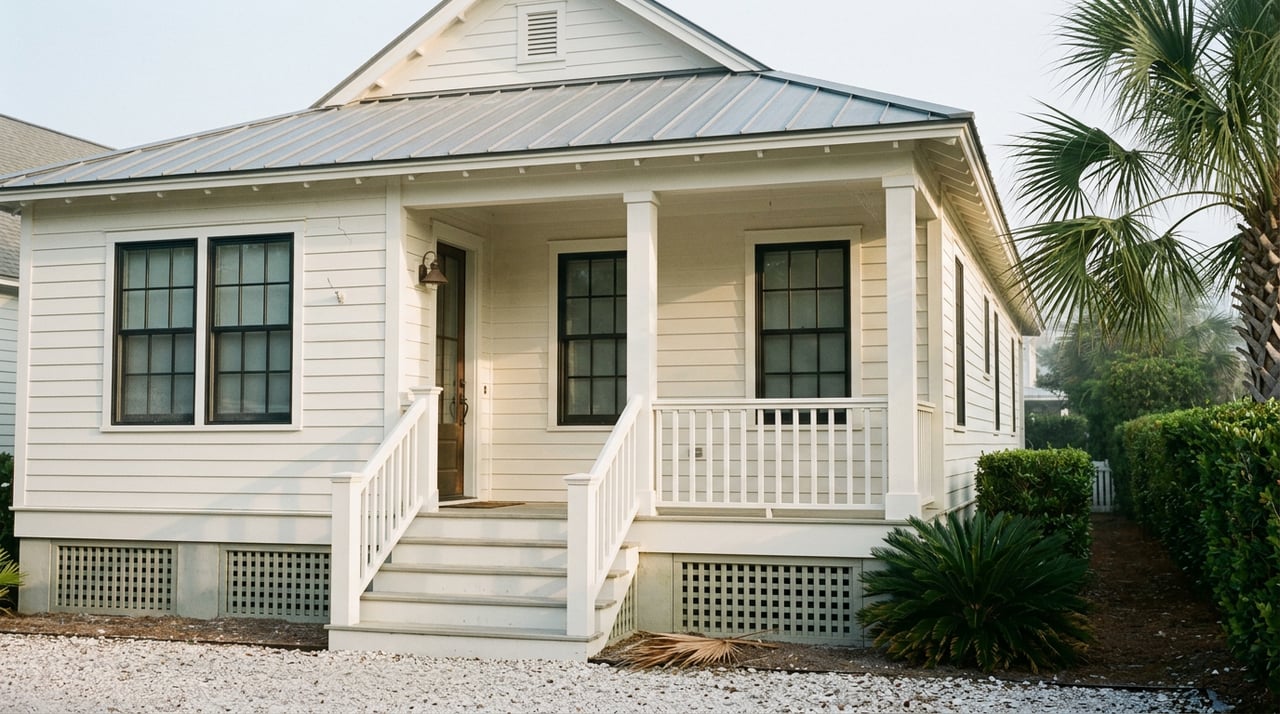
A buyer closes on a canal-front cottage a few blocks off Old Highway 98, planning to list it as a weekly rental the same way three houses on the same street already do. Two weeks later, an email arrives from the city's code compliance office. Not a fine yet, just a notice: the parcel sits outside the zoning boundary where short-term rentals are permitted, and the listing needs to come down until the zoning is confirmed or the property clears a formal use change.
Destin gets described as one of the more short-term-rental-friendly cities on the Gulf Coast, and in a broad sense that holds up. But the city's own rules draw the real line at the parcel, not the city limit. Two houses on the same block can carry different zoning designations depending on how and when they were platted, and "the neighbor rents on Airbnb" is not evidence that your address can. For a buyer underwriting a purchase around rental income, that distinction changes the math before the first guest ever checks in.
The Zoning Line Nobody Reads Before Making an Offer
Short-term rentals in Destin are only allowed in specific zoning districts, not city-wide. The designations include codes like CBR, HIMU, BRMU, GRMU, CMU, NHMU, ROI-TD, and SHMU, and permitted areas include Crystal Beach Resort and several of the Holiday Isle residential categories. Outside those districts, a house can be a perfectly legal residence and still be legally off-limits to weekly rental, regardless of what the listing photos imply or what the house next door is doing.
The only way to know for certain is to ask the source directly. The City of Destin's Planning Division confirms zoning designation by phone at 850-837-4242, and that call is worth making before a rental-income assumption goes into an offer, not after closing.
Why a House Has to Change Its "Use" Before It Can Rent by the Week
Even inside a permitted zoning district, operating a residential property as a short-term rental counts as commercial activity under the city's code. If the house hasn't already been through this process, it may need to complete a formal "Change of Use" application before the city will issue an STR registration. That application runs through the city's COMPASS online portal, carries a non-refundable $2,000 fee, and triggers inspections from the Planning, Engineering, and Building departments before approval.
This step sits on top of, not instead of, the annual STR registration every operating rental needs. A buyer who budgets for the registration fee alone can still be caught off guard by a separate five-figure-adjacent gate standing between closing day and the first booking, plus whatever time the inspection queue adds to the calendar.
Condos and Houses Run on Different Tracks Entirely
The compliance path also depends on what kind of property is being purchased, and the two tracks don't overlap much.
| Condo or apartment unit | Single-family home or townhome | |
|---|---|---|
| City STR registration | Not required | Required annually |
| State license | DBPR Vacation Rental Condo (VRC) license | DBPR Vacation Rental Dwelling (VRD) license |
| Governing authority | The building's HOA rental policy | City zoning approval, plus Change of Use if applicable |
| Signage | Not required by the city | 18x18 inch sign posted within 7 days of registration, bearing a city-issued decal |
| Extra paperwork | None beyond DBPR and HOA compliance | Notarized Affidavit of Bedrooms and Parking |
A buyer moving from a condo search to a single-family search, or the reverse, is really moving between two separate regulatory systems. A condo unit that already carries a valid DBPR license and sits in a building with an HOA that permits short-term rentals can often start renting without ever filing anything with the city. A single-family home or townhome, no matter how well it photographs for a listing, has to clear zoning, potentially Change of Use, an annual city registration, and a notarized affidavit before it's legal to book.
The Fee Schedule That Rewards Filing Early
For single-family homes and townhomes, the annual registration fee scales with square footage, running from roughly $500 for properties up to 2,499 square feet to around $700 for homes at 5,000 square feet or larger. The city's own registration timeline adds a penalty for waiting: a $100 late fee applies after March 31, and that jumps to $500 if registration still hasn't been filed by June 1.
Occupancy is capped regardless of how the property is marketed. The limit is two adults per bedroom plus four additional people, with an overall ceiling of 24 people per house no matter how many bedrooms it has. For a buyer eyeing a large home specifically to host bigger family reunions or multi-couple getaways, that 24-person cap is worth checking against the actual floor plan before assuming the home can host as many guests as the square footage suggests.
Third-party rental data for Destin has put median annual host income in the neighborhood of $57,000, with an average daily rate around $342 and roughly 67 percent occupancy. Figures like that are useful for sizing the upside, but they only apply to properties that have actually cleared the zoning, registration, and licensing steps above. A house sitting in the wrong zoning district, or one still waiting on a Change of Use approval, isn't earning any of that until the paperwork catches up.
What This Means Before You Write the Offer
For a buyer planning to operate a short-term rental, a few questions are worth asking before the inspection contingency comes off:
- What is the parcel's current zoning designation, confirmed directly with the city's Planning Division, not assumed from the neighborhood name.
- If the home is a single-family house or townhome, has it already completed a Change of Use approval, and does the seller have documentation.
- Is there a current, active STR registration on file with the city, and does it transfer or does a new owner need to reapply.
- If the property is a condo, what does the building's HOA currently allow, in writing, since an HOA board can tighten rental rules faster than the city or state can.
- Does the current DBPR license number on any existing listing match the property address and remain active.
None of this replaces a conversation with an attorney or the city itself for anything that touches zoning interpretation or code enforcement. But knowing which questions to ask, and asking them before the offer is written rather than after the closing, is the difference between buying a rental and buying a house that might become one eventually.
A Few Questions Worth Asking Directly
If a house I'm buying is already operating as a short-term rental, does that mean the zoning and Change of Use are already settled? Not automatically. Ask the seller for the current STR registration certificate and DBPR license number, and confirm both are active and match the address. A prior owner's compliance doesn't always transfer cleanly to a new one, especially if the registration lapsed at some point.
What if I only want to rent by the month, not by the week? Rentals of six months or longer generally fall outside Florida's definition of a transient or short-term rental, which is what triggers the DBPR license and city STR registration requirements. A buyer planning seasonal or month-to-month leasing rather than weekly bookings may not need the same compliance path, though condo buyers should still confirm their building's HOA rules on any rental term.
Is a DBPR license number on a listing proof the property is fully compliant? It confirms the state layer only. A valid DBPR license doesn't confirm the city registration is current or that a required Change of Use was ever completed for a single-family home. Ask for both documents separately.
Buying with rental income in mind means underwriting the zoning designation and the compliance timeline as carefully as the purchase price. Donna Gonzalez spent more than 13 years as a finance director before moving into real estate, and that background shapes how she walks investment-minded buyers through exactly this kind of due diligence before an offer goes in, not after. If you're evaluating a Destin property with rental income in the plan, let's connect and go through the zoning and licensing picture together before you write the contract.